



If It Feels Comfortable, You Might Be Avoiding Something.
Lessons from Dare to Lead by Brené Brown
Vulnerability isn’t a quality we generally associate with strong leadership. We’re much more likely to think of leaders as confident, decisive and in control.
But when we work with other people, uncertainty, risk and the possibility of failure are unavoidable, and that means vulnerability is too. Try to avoid it, and it shows up as skirting difficult conversations, holding back or protecting yourself, which can get in the way of honest conversations and trust.
So what happens when we approach vulnerability differently? In a recent READ TO LEAD session, we challenged the idea that strong leadership means always knowing the answer or staying firmly in control, and asked what it looks like to lead well when you don’t have all the answers.
The Discussion
When things feel uncertain or the pressure is on, we often reach for ‘emotional armour’.
We discussed how for some of us, that means becoming more direct or abrupt. For others, it means withdrawing. And sometimes it means doing the opposite: stepping in, taking on more and making ourselves responsible for getting everything done.
These behaviours might look very different, but they all come from the same place: an instinct to protect ourselves when vulnerability feels uncomfortable. It can feel easier to say yes than set a boundary, avoid a difficult conversation than risk conflict, or take control rather than trust someone else.
But what feels safest isn’t always what good leadership requires. The challenge is noticing when our instinctive response is taking us away from the kind of leader we want to be.
The Insights
Recognising those instinctive responses gives us the opportunity to choose something different. Instead of protecting ourselves, we can get curious, ask the question and have the honest conversation.
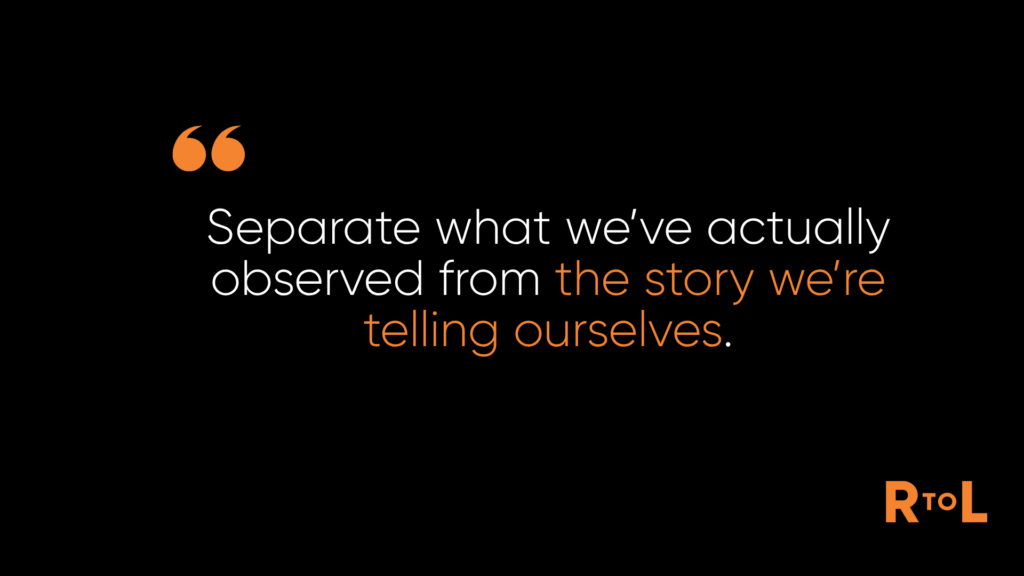
Curiosity is particularly important when we don’t have the full picture. People naturally fill gaps in their knowledge with assumptions, what Brown calls ‘Shitty First Drafts’. Instead of treating those stories as fact, she suggests separating what we’ve actually observed from the story we’re telling ourselves. That creates space to ask questions, test our assumptions and understand what is really going on.
Perfectionism works the same way. It can look like striving for excellence, but perfectionism is really about avoiding criticism and earning approval. A healthier approach shifts the question from ‘What will other people think?’ to ‘How can I improve?’ That means accepting that mistakes, uncertainty and difficult conversations aren’t signs that leadership has gone wrong. They’re often where learning happens.
This is also where values become important. They’re easy to stand by when there’s little at stake but their real purpose is to guide us when things get uncomfortable, when the easier option might be to seek approval, avoid conflict or stay safely within our comfort zone. Brown found that the most courageous leaders weren’t guided by long lists of values, but anchored themselves to just two.
How do you choose yours? Think of a time you felt proud of how you handled something difficult. What mattered most? Then think of a time something didn’t sit right. Which value was compromised? Look for the values that keep coming up and narrow them down to two.
The Action
It’s often in the moment that our instinctive responses take over. Creating a small pause can help us choose how we want to respond instead. Here are four situations to try:
1. When a meeting gets uncomfortable
If you’re challenged, put on the spot or don’t know the answer, try Brown’s eight-second rule. Resist the urge to respond immediately. Sit with the discomfort, breathe and give yourself eight seconds before deciding what to say. If you need to, simply say: ‘I need a moment to think about that.’
2. When you’re about to say yes
If someone asks you to take something on, pause before committing. Ask yourself whether you genuinely have the capacity, or whether saying yes is simply the more comfortable response. Say you’ll come back to them once you’ve checked your priorities.
3. When you’re making assumptions
If an email, comment or someone’s behaviour leaves you frustrated or concerned, separate what you know from the story you’re telling yourself. What have you actually observed? What have you filled in yourself? Then ask a question before acting on your assumption.
4. When you’re facing a difficult conversation
Before you go into it, come back to the two values you want to guide how you lead. Ask yourself what those values look like in this particular conversation, then use them to guide what you say and how you say it. If honesty is one of them, that might mean opening with: ‘There’s something we need to talk about that I’ve been putting off.’
The Impact
One READ TO LEAD’er shared that they had noticed a pattern. Whenever something slipped, she picked it up herself. It felt like the responsible thing to do. It also meant late nights and a bit of resentment that nobody else seemed to care as much as she did.
When a client report stalled two days before it was due, she raised it in the Monday team meeting instead of taking it home. She explained what was left and said she couldn’t do it this time. Then she stopped talking. Nobody spoke. Someone looked down at their laptop. It was the longest eight seconds of her week.
Eventually, one of the team said he could take some of it, but not all of it, and probably not to the standard she would have. The report went out a day late, with a note to the client. It wasn’t perfect, and part of her still thinks she could have done it better.
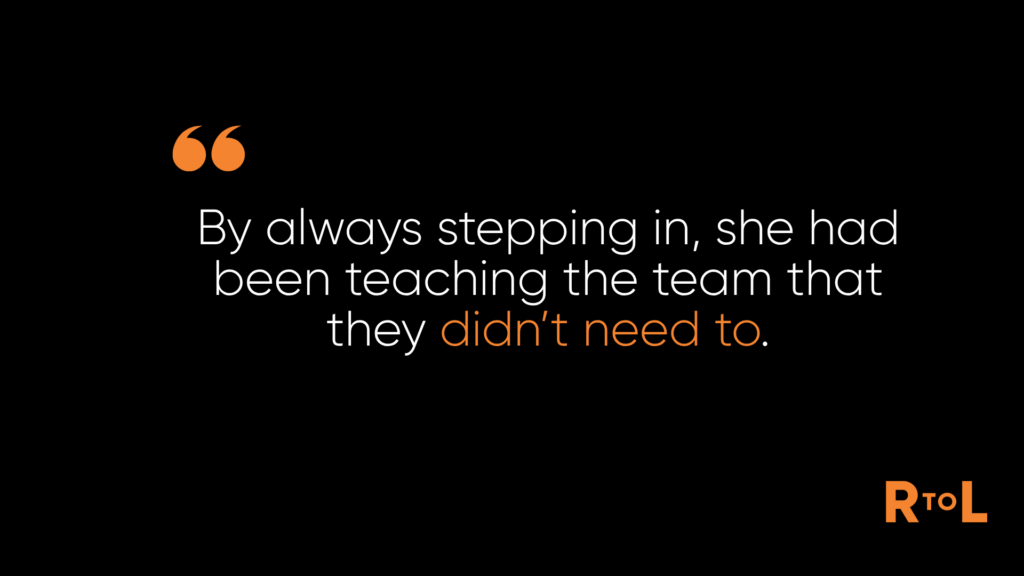
But a fortnight later, the same person flagged a problem before it became urgent. That had never happened before. By always stepping in, she had been teaching the team that they didn’t need to.
Key Takeaways
- Vulnerability and courage go together. Stepping into uncertainty rather than protecting yourself from it is part of courageous leadership.
- Notice your emotional armour. Under pressure, instinctive behaviours can take us away from the kind of leader we want to be.
- Question the story you’re telling yourself. When information is missing, separate what you know from what you’ve assumed.
- Choose clarity over comfort. Clear boundaries and honest conversations can feel uncomfortable, but avoiding them can create bigger problems.
- Know what you stand for. Two core values can give you something to come back to when the right response isn’t the easiest one.
One question to leave you with…
What’s one uncomfortable conversation or decision you’ve been putting off, and what would courage look like in that moment?


